

If you own a vintage vehicle, you've probably heard the term "YOM plates" tossed around at car shows and collector forums. Year of Manufacture license plates are one of the most practical and visually satisfying ways to complete a classic car restoration — and they've become a serious collecting category in their own right. Here's everything you need to know about YOM plates, from what they are to how to find the right one for your vehicle.
Important Notice: Brandywine General Store sells vintage license plates as collectibles only. We do not guarantee that any plate we sell will qualify for YOM registration in your state. Registration eligibility — including condition standards, legibility requirements, and program availability — varies widely by state and changes over time. It is solely the buyer's responsibility to verify their state's current YOM requirements before purchasing a plate for registration purposes.
What Are Year of Manufacture (YOM) License Plates?
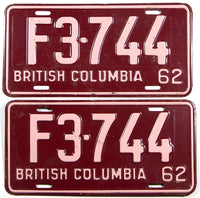
A Year of Manufacture plate is a vintage license plate that was originally issued in the same year as the vehicle it's being registered on. Many U.S. states allow owners of historic or antique vehicles to register their car using a period-correct plate from the vehicle's model year, rather than a modern plate. The result is an authentically restored look from bumper to bumper — including the tag on the back.
YOM registration programs vary significantly by state. Some states have formal programs with straightforward approval processes; others require the plate to meet specific condition standards or pass DMV inspection. A handful of states don't offer YOM registration at all. Always check your state's DMV requirements before purchasing a plate for registration purposes.
Why Collectors and Restorers Love YOM Plates
The appeal of a YOM plate goes beyond aesthetics, though the look is undeniably compelling. Here's why they're so sought after:
- Period-correct authenticity: A 1957 Chevy Bel Air with a 1957 California plate looks exactly as it would have rolling off the lot. For serious restorers, that detail matters.
- Legal registration: In states with YOM programs, these plates aren't just decorative — they're fully legal and road-ready, provided they meet your state's specific requirements.
- Historical character: Vintage plates carry the design language of their era — the fonts, colors, and graphics that modern plates simply can't replicate.
- Collectible value: Certain states, years, and low-number plates command real premiums among collectors, independent of any vehicle registration use.
How YOM Registration Works
The process varies by state, but the general steps are:
- Verify eligibility: Confirm your state offers a YOM program and that your vehicle qualifies (typically 25+ years old, sometimes classified as "historic" or "antique").
- Find a matching plate: Source a plate from the correct year for your state. The plate must typically be legible and in acceptable condition per your DMV's standards.
- Submit for approval: Bring the plate to your DMV or submit documentation for inspection. Some states require the plate to be re-stamped or paired with a current validation sticker.
- Register and display: Once approved, the vintage plate is assigned to your vehicle and becomes your legal registration plate.
Condition requirements differ significantly by state — some accept plates with moderate wear as long as the numbers are legible, while others require near-mint examples. Some states also have specific requirements around number and letter clarity for law enforcement readability. We strongly encourage you to contact your state DMV directly to confirm current requirements before purchasing any plate for YOM registration. We cannot guarantee registration eligibility for any plate we sell.
What to Look for When Buying a YOM Plate
Whether you're buying for registration or display, condition is the primary factor. Key things to evaluate:
- Legibility: All numbers and letters must be clearly readable. This is non-negotiable for YOM registration — many states specifically require that characters be legible from a set distance — and it's equally important for display quality.
- Structural integrity: No significant bends, cracks, or holes that would compromise the plate's appearance or registration eligibility.
- Paint and reflectivity: Look for strong color retention. Faded or peeling paint detracts from both appearance and, in some states, registration eligibility.
- Correct state and year: Obvious but critical — confirm the plate matches your vehicle's model year and the state where you'll be registering it.
Remember: even a plate that looks great to the eye may not meet your specific state's YOM registration standards. Always verify with your DMV first — we sell our plates as collectibles and cannot be responsible for registration outcomes.
Popular States for YOM Collecting
Some states are particularly prized among YOM collectors and restorers:
- California: The gold standard for YOM plates. California's program is well-established, and the state's iconic yellow-on-black (1963–1969) and blue-on-yellow (1956–1962) plates are among the most recognizable vintage plates in the country.
- Texas: Bold designs and a strong collector community make Texas plates highly sought after across multiple eras.
- New York: Early porcelain and embossed plates from New York are prized for their craftsmanship and historical significance.
- Pennsylvania: Known for distinctive keystone designs and a long history of varied plate styles.
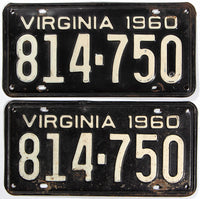
- Virginia: Virginia's rich automotive history and varied plate designs across the decades make it a favorite among Mid-Atlantic collectors and restorers alike.
YOM Plates as Pure Collectibles
Not every YOM plate ends up on a vehicle. Many collectors pursue vintage plates purely for display — building state sets, era sets, or collections organized around specific design periods. A well-preserved 1950s plate from any state is a striking piece of Americana, whether it's mounted on a garage wall or framed in a shadow box.
For display-only collectors, condition standards are more flexible, and the focus shifts to visual appeal, rarity, and historical interest. Low serial numbers, unusual color variants, and plates from short-lived design runs are especially prized.
Find Your YOM Plate
Browse our curated selection of vintage license plates — sourced from across all 50 states and hand-selected for condition and authenticity. Whether you're completing a restoration or building a display collection, we'll help you find the right plate for the right year. Just be sure to confirm your state's YOM registration requirements with your DMV before buying for registration purposes — we're happy to answer questions about a plate's condition, but registration eligibility is always the buyer's responsibility.




Comments